
[By Greg Zyla]
Q: Dear Greg, I have been trying to recall, along with my brother Fred, a story my father used to tell about early automobiles and Red Rock Mountain in Pennsylvania. As I remember it, in the early days cars had their gas tanks mounted in the rear, so when they tried to climb a steep grade like Red Rock Mountain, the fuel would not flow properly. Because of that, drivers often had to back up the mountain in reverse to keep the fuel moving to the engine.
Dad always said the first car that could go up the mountain forward was a Hudson, because it had a fuel pump. I seem to remember my mom saying it was a Hudson Terraplane and that this was sometime around 1934. My mother’s memory of the Terraplane was not that favorable, as she said it always needed oil.
My dad’s next car was a 1940 Chevrolet Special Deluxe, which my brother Fred still has in his garage in Little Egg Harbor. I have a story about that car for another time.
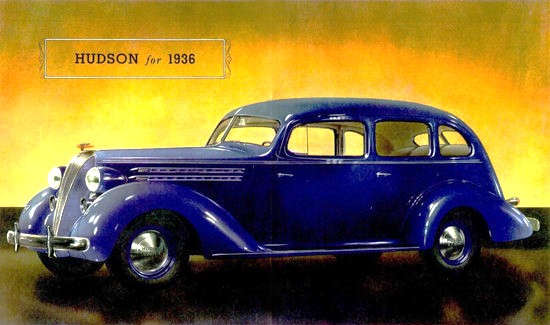
A rendering of a 1936 Hudson Terraplane, part of Hudson’s lower-priced but capable lineup. Cars like this helped build the company’s reputation for powerful performance at a time when steep grades like Red Rock Mountain could challenge early automobiles. These Terraplanes also featured “suicide doors,” hinged at the rear rather than the front. (Hudson)
My dad also coached baseball at Huntington Mills. He had lost his right arm at age 12 when he fell out of an apple tree, but he still coached and even drove the players to games before the school had a bus in our Terraplane.
I read your columns every week in the Bloomsburg Press Enterprise newspaper. Does any of that sound right?
Thank you, Greg. Sincerely, Gahrad Harvey, Shickshinny, Pa.
Q: Gahrad, that is a terrific story, and like many handed-down automotive tales, it is rooted in truth, even if a few details have gotten smoothed out over time.
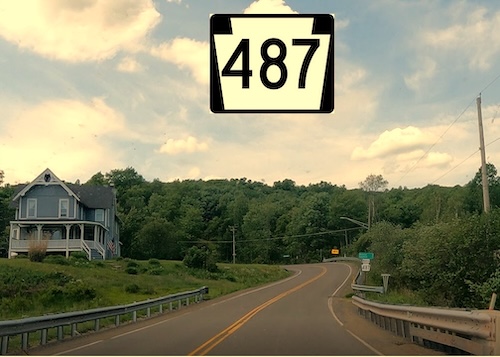
Let us start with the setting, because in this case the road is just as important as the car. If you have ever driven Route 487 south out of Dushore toward Bloomsburg, you know Red Rock Mountain is not just a hill. It is a serious grade that demands respect even today.
I know that firsthand. My son once got stranded on Red Rock Mountain in his 1998 Camaro Z28 when a blizzard hit suddenly out of nowhere. The State Police took my son back to Dushore, where I drove to pick him up. We then planned to retrieve the Z28 the next day. We weren’t surprised to see about six more cars stuck like our Camaro when we returned that next day. It was a reminder that even modern vehicles can be tested on that mountain.
As for the fuel pumps or lack thereof, your father was right about one key point. Early cars did struggle on steep grades. In the earliest cars and trucks of the teens and 1920s, fuel delivery was often gravity-fed. That meant there was no pump drawing gasoline from the tank to the engine. Instead, the system depended on fuel flowing downhill.
When manufacturers moved fuel tanks toward the rear of the car, gravity alone could not always do the job, especially on steep hills. The engine could starve for fuel, sputter, or stall.
That is where the old stories come from.
In some cases, drivers did back up hills to improve fuel flow. It was not common, and certainly not desirable, but it did happen often enough to be remembered. A climb like Red Rock Mountain would have been exactly the kind of place where that might occur.
A rendering of a 1936 Hudson Terraplane, part of Hudson’s lower-priced but capable lineup. Cars like this helped build the company’s reputation for powerful performance at a time when steep grades like Red Rock Mountain could challenge early automobiles. These Terraplanes also featured “suicide doors,” hinged at the rear rather than the front. (Hudson)
I remember a similar story from my own family. My dad’s first car was a 1940 Chevy two-door business coupe. I was only about four years old, but I recall him driving up a steep hill near Shamokin. We just barely made it to the top, and I remember him saying that if we did not make it, he would have to back down. My brother and a few of our friends were in the car, too. By 1940, that Chevy had a fuel pump, so the problem was something else.
The real turning point came with the fuel pump.
By the late 1920s, mechanical fuel pumps were introduced, using engine motion to draw gasoline from the tank and deliver it to the carburetor regardless of the car’s angle. That one change made all the difference. Cars could climb hills normally without worrying about fuel starvation.
I have a good example of how that system carried forward. My 1972 Challenger originally had an engine-mounted fuel pump actuated by the camshaft. It was simple, dependable, and easy to service. I eventually replaced it with a Holley electric fuel pump, but the original design worked just fine for decades.
Today, however, fuel pumps have become much harder to service. What once took a half hour on an older car can now require major disassembly or the removal of the fuel tank, sometimes resulting in a large repair bill. In trying to improve design and packaging, manufacturers have made things far more complicated than they used to be.
Now, about Hudson.
Hudson was not the first company to use a fuel pump, but it did build cars that developed a reputation for strength and performance. That reputation grew even stronger in the early 1950s when the Hudson Hornet became a dominant force in NASCAR racing, winning a remarkable number of races and helping establish the company’s reputation for durability and road-holding ability.
Because of that, it is easy to see how, in local memory, a Hudson might have been the first car people remembered going up Red Rock Mountain without trouble. Over time, that experience likely became tied to the idea that it was the first car with a fuel pump.
That is how stories evolve.
Your family’s Hudson Terraplane fits right into that history. Built from 1932 through 1938, the Terraplane was Hudson’s lower-priced but capable line, known for dependable performance.
Your mother’s recollection that it needed frequent oil checks is also accurate. Cars of that era commonly used oil at a rate that would surprise modern drivers. It was standard practice to check it often and carry extra quarts along.
You also mentioned your father using that Terraplane to haul baseball players to games. That image says a lot about the time: A coach who had lost his arm as a boy, wearing a suit, loading up a car and heading out to games. Those cars were not just transportation. They were part of everyday life.
So, what is the truth behind your father’s story?
Early cars could struggle on steep hills because of primitive fuel systems. In some cases, drivers did back up hills to keep fuel flowing. The development of mechanical fuel pumps solved that problem. Hudson was not the first to use fuel pumps, but it built cars that earned a reputation for strength and reliability.
Local experience likely turned a capable Hudson into the car people remembered as the first to go up Red Rock Mountain without trouble.
And that is why stories like this matter. They may not always be technically perfect, but they capture what it was like to drive in those early days, when every hill, including Red Rock Mountain, could be a real test.
Thanks for the memories, Gahrad.
(Greg Zyla is a syndicated auto columnist who welcomes reader input and questions on collector cars, auto nostalgia or motorsports at extramile_2000@yahoo.com or at 303 Roosevelt St., Sayre, Pa. 18840)

Be the first to comment on "Collector Car/Cars We Remember; Climbing Red Rock: When Cars Backed Up to Go Forward"