
— When the Feds Call the Racing Press —
[By Greg Zyla]
After more than four decades in motorsports journalism, I’ve learned that racing stories don’t always stay at the racetrack. Occasionally, they follow you home — and sometimes they arrive in the form of a phone call from a federal agency.
Over the course of my career, this has happened three times.
Each call was professional. Each was brief. And each carried the same underlying message: we’re not calling because you’re in trouble — we’re calling because you talked to someone we need to understand.
The main call of note came in 1989.
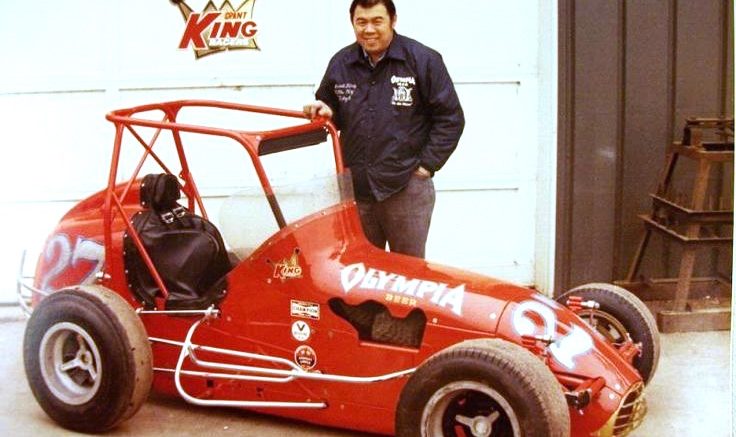
I had contacted Grant King for an interview related to PRI Magazine, still the number one respected business publication in the racing industry. At the time, King was already a major figure in American open‑wheel racing — a noted builder of sprint cars, midgets, and Indianapolis 500 style championship race cars. His cars had powered multiple USAC sprint championships and featured drivers such as Sheldon Kinser, Gary Bettenhausen, and Tom Sneva. He was widely admired for his fabrication skills and ability to build competitive cars without high-dollar support and on extremely limited budgets.
Our conversation was straightforward and lasted perhaps 30 minutes. We spoke about racing, engineering, and history – the kind of exchange journalists and builders had thousands of times in that era. I hung up, filed my notes, and moved on.
Not long afterward, the phone rang. This time, it wasn’t PRI; it was the FBI.
The agent identified himself and then asked a series of simple questions: why I had called Grant King, why he called me back, what we discussed, and whether I had ongoing contact with him. There was no accusation and no pressure, just fact‑gathering. From their standpoint, they were reconstructing communications as part of a broader investigation.
I answered honestly. Racing. PRI. Technical background. Nothing more. The agent thanked me, and the call ended.
Roughly a year later, the reason for the call became public. Grant King was charged in federal court with assisting in a stolen‑vehicle and VIN‑switching operation involving late‑model street cars, crimes entirely unrelated to racing.
The investigation had been underway for years before it surfaced publicly, which explained the timing of the call. King’s racing career effectively ended, and his legacy became complicated overnight.
For me, it was a reminder that journalism often intersects with events far larger than the stories we’re writing. King spent six months in prison and returned to his racing business. Unfortunately, King died from injuries he received in a highway crash in 1999. He was 67.
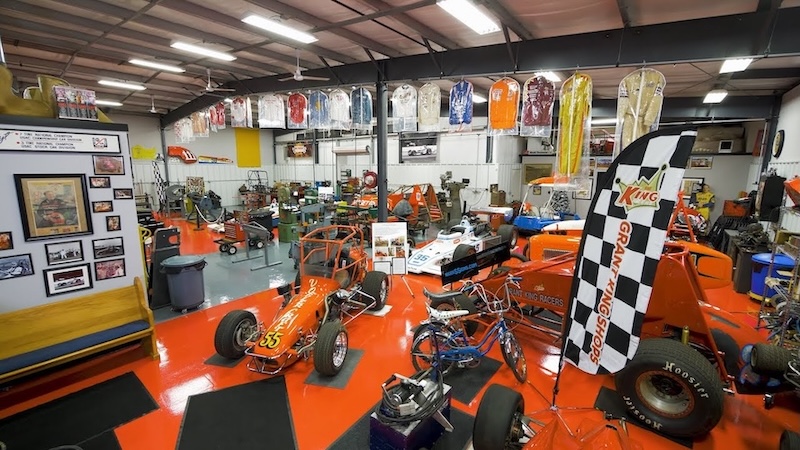
The Grant King Race Cars museum and garage. (Museum photo)
However, the Grant King story ends on a positive note as his garage is now a working museum thanks to Bill Throckmorton, Grant King’s nephew.
Throckmorton grew up around Grant King, and today he operates and curates the Grant King Race Shops as a working race‑shop museum in Indianapolis, alongside his wife, Stephanie Throckmorton. Bill preserved the original shop and its assets after Grant King’s death and turned it into the public, appointment‑only museum it is today. (See the many YouTube videos on the museum for more info).
The second call of note came earlier than the main King call, and this one revolved around something far more obscure to non‑racers: tires. The time of this phone call was 1978-1979.
Specifically, the FBI phone inquiry involved tires that had once been mounted on Kenny Brightbill’s No. 19 modified stock car. I was told very clearly that Brightbill himself was not in any trouble, and that point was emphasized from the start.
On the tire was written “19, bright, rr.” I quickly told the agent that it “for sure” came from Kenny Brightbill’s No. 19 modified stock, which he then told me they already knew that information.
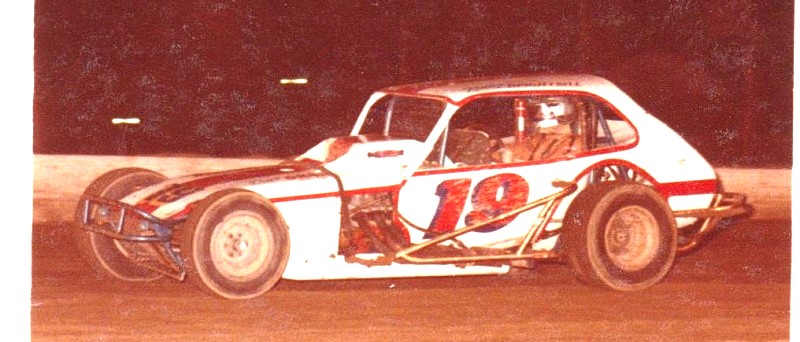
Kenny Brightbill was one of modified stock cars’ top drivers, winning numerous feature events during his career. His right rear tire was the subject of a phone call to our author. (Reading Fairgrounds photo)
As best I could determine, investigators were trying to trace the source of illegally dumped racing tires. How my name entered that chain wasn’t surprising. I attended many races at the Reading, Pa. Fairgrounds track in Pennsylvania and saw Brightbill win many races. Racing journalists often know where cars, teams, and parts were at specific points in time.
I explained what anyone who has spent time in a modified pit already understands: trying to track down what happens to a specific racing tire after it leaves a car is like trying to find a needle in a haystack. A big right‑rear slick on a top‑tier modified is typically changed every four or so races, sometimes sooner. Under certain conditions, abrasive surfaces, heat cycles, or sudden changes in track bite, that tire might be swapped during a single race night.
Once a tire leaves the car, it can be sold, traded, stacked, scuffed, discarded, or passed along quietly. Any meaningful paper trail effectively ends.
The agent on the other end of the line listened. They understood. The call remained professional and brief. I was never told where the investigation went, and as far as I recall, nothing ever came of it.
The third call came from a different agency entirely — the Internal Revenue Service (IRS) somewhere around 1982.
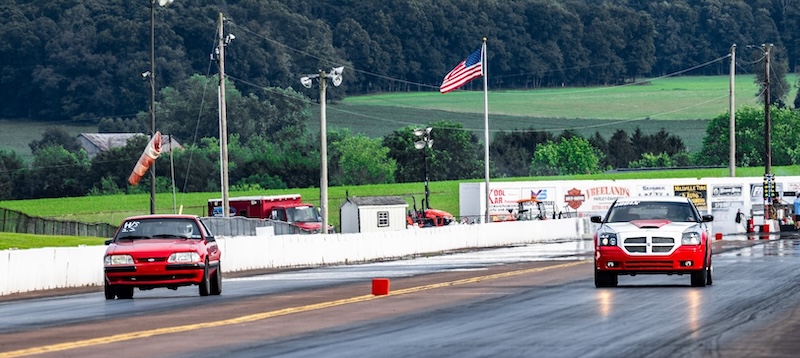
Numidia Dragway in Pennsylvania operates weekly to this day and is one of Pennsylvania’s top drag racing attractions. Shown are Luke Kaiser, left, and Steve Kaiser nearing the finish line in 2025 action. (Bob Reed photo)
By that point, the pattern was familiar. The IRS already knew my background: that I had served as a weekly track announcer from 1975 through mid‑1979 at Numidia Dragway in Pa., and that I had left the announcer’s booth to build and race my own car full‑time, beginning in 1979. They also knew I competed actively during the 1979 and 1980 seasons.
They asked me to identify a race team I had announced about and then competed against during that period and to explain whether it was a legitimate racing operation.
Thankfully, It was a legitimate racing operation.
I explained that the team competed in the same Super Pro class I did, that it ran regularly, and that it indeed fielded high‑dollar race cars, which was not unusual at the upper levels of the sport. From the IRS standpoint, the question wasn’t racing; it was tax treatment, specifically whether the operation qualified as a legitimate business for promotion and, most importantly, tax deduction purposes.
Once I explained that the team was real, competitive, and active, and that it raced head‑to‑head with me in the same class, the conversation ended.
I won’t identify the team for obvious reasons. The situation ended professionally, which is how it should.
Looking back, none of the calls were dramatic or threatening. None suggested wrongdoing on my part. When questions arise, investigators look for people who were there to explain what was normal inside the sport.
After more than 43 years in motorsports journalism — including time as a publisher, announcer, racer, and columnist — I’ve learned that if you stay in the business long enough, the phone may ring for reasons you don’t expect. When it does, you answer honestly, explain clearly, and let the facts speak for themselves. Racing stories don’t usually end with federal phone calls — but when they do, they tend to reveal how little the outside world, including these federal agents, understands about the sport and how carefully journalists must navigate both.
In summary, racing merges money, engineering, transport, and competition in a sports entertainment delivery. When questions arise, investigators look for people who were there and who can explain what was real and what only looked unusual to outsiders.
That’s not drama.
That’s reality.
Next week, we’re back to collector cars but here in 2026 I will write more of my personal memories, as requested by my dedicated readers.
(Greg Zyla is a syndicated auto columnist who welcomes reader input on collector cars, auto nostalgia and motorsports at extramile_2000@yahoo.com or Greg Zyla, Roosevelt St., Sayre, Pa. 18840.)

Be the first to comment on "Collector Car Corner / Cars We Remember"