
Collector Car Corner/Cars We Remember
By Greg Zyla
Our mailbox is filling up again. Here we go.
Gettysburg Times reader remembers when a VW Beetle changed everything
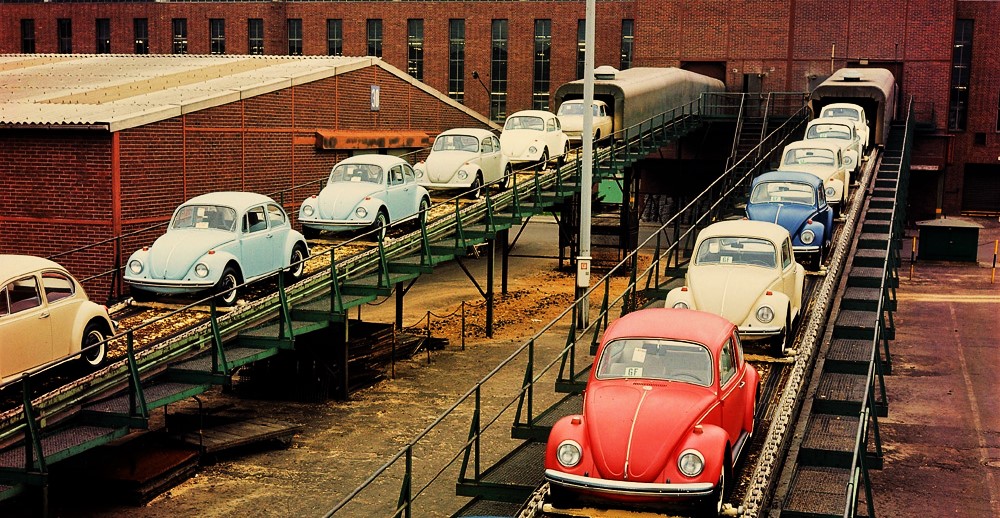
Although far removed from a 1955 or 1957 Chevy, Wildasin’s father put the youngster in a 1958 Volkswagen Beetle powered by a 36-horsepower engine. As the story relates, the young driver eventually grew to love his Beetle and today wishes he had never sold it. Shown are Beetles rolling off the assembly line.
Photo Provided
Q: Dear Greg, every Saturday I look forward to receiving my copy of The Gettysburg Times newspaper, and the first thing I look for is your tremendously interesting and insightful articles featured in “Collector Car Corner” and “Cars We Remember.”
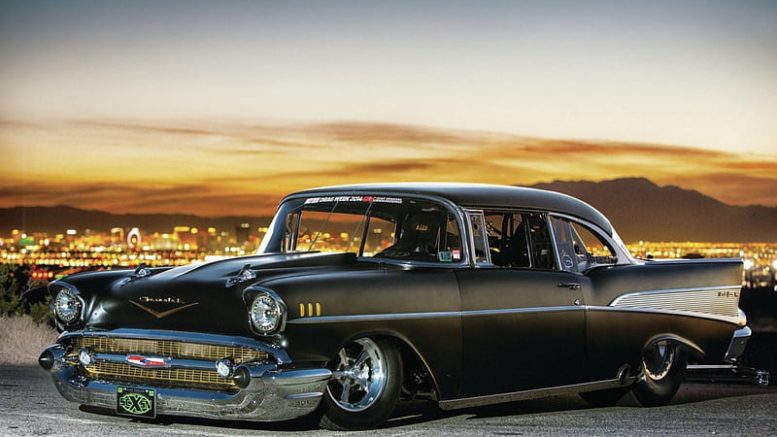
When I turned 16 way back in 1969, I desperately wanted one of those exceedingly cool 1957 Chevy Bel Air two-tone two-door hardtops. They were the coolest and fastest cars around and seemed to dominate at the local drag strips. I was not greedy and would have been happy with a similar 1955 Chevy.
I dreamed of making a few modifications, such as shaving the hood and trunk, installing lowering blocks to give it that airplane look, and adding beautiful chrome covered dual four-barrels, valve covers and chrome headers. I wanted color-coordinated spinner hubcaps. I’d remove the door handles and install a knee-bump door opener. Additional speakers were a must, as were dual glass packs. Once they were broken in properly, the sound they made when you accelerated through first and second gear and then let off the throttle was music to a teenager’s ears.
Here’s where my dreams met reality. Super-fast cars and youthful enthusiasm were not always a great combination. Late-night illegal drag racing on straight stretches of road was a frequent and dangerous occurrence, and my father was rightfully afraid I would succumb to the challenge. Since I did not have the money to buy my dream car and pay the insurance, I was at my father’s mercy.
His solution was to get me a blue 1958 Volkswagen Beetle. At first, I hated it. To me, it was an unusual novelty because there were very few on the road. My Beetle had a 36-horsepower air-cooled engine mounted in the rear and, by 1970, there were many Beetles on the road. It would be interesting to see how well they sold in the United States.
I remember there was no gas gauge, and if you were running out of fuel there was a little reserve lever to push that provided an additional gallon or so of gasoline. This came in handy if you were out on a date because it gave you a little extra time before having to find a gas station.
In the end, I loved how my Beetle hugged the road, and I enjoyed shifting through the gears with the four-speed manual transmission. Today, I have many fond memories of that first car, and I regret ever selling it. This story goes back 66 years. Thank you for your patience.
Sincerely, John Wildasin
East Berlin, Pa.
A: John, thanks so much for your kind words and for sharing the wonderful memories of your first car, which clearly was not what you originally wanted. Looking back, however, your father made the right decision by steering you away from a fast street machine at such an immature age.
I speak from experience, as I lost one of my best friends in 1967 during an illegal street drag race. Even today, it remains a painful memory.
As for the Volkswagen Beetle, what started out as a disappointment eventually became a car you grew to love, and that same story was repeated thousands of times across America. The Beetle earned a reputation for reliability, simplicity, excellent fuel economy and surprising durability. I even owned a red 1965 Beetle before reporting for duty at Fort Jackson, S.C.
Regarding your interest in how well the Beetle sold in America, I did a little research and found that its popularity exploded during the 1960s and early 1970s. U.S. sales climbed from just over 50,000 vehicles in 1957 to nearly 400,000 annually by the late 1960s, making the Beetle one of the most successful imported cars ever sold in America. In fact, 1968 was its best sales year in the United States, with nearly 400,000 sold.
Your recollection of the reserve fuel lever is right on the mark. Many early Beetles had no conventional gas gauge and instead relied on a reserve fuel system that provided drivers with a little extra fuel when the tank ran low. It was a simple but clever design that saved many owners from being stranded.
Today, surviving Beetles remain among the most beloved collector cars in the hobby. While many young drivers dreamed of owning a hot rod Chevy, millions of Americans eventually discovered that the humble Volkswagen Beetle was one of the smartest automotive purchases they ever made.
Further, the Volkswagen Beetle became such a phenomenon in the United States that it helped change American attitudes toward imported cars, proving that a small, economical vehicle could compete successfully against Detroit’s biggest offerings.
Have a great week, John, and thanks again for bringing back some wonderful memories. I also received an addendum from you that I’ll use in an upcoming feature.
Bloomsburg reader puts faith in Nissan Titan
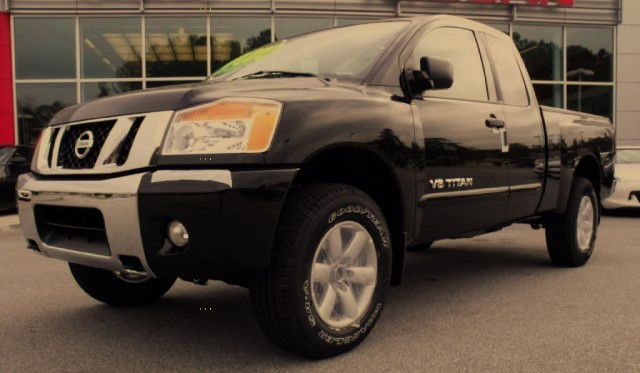
A Bloomsburg reader has put his faith in a used 2010 Nissan Titan King Cab to handle the demands of his lawn care business after retiring a reliable Chevy Silverado. Unfortunately, Nissan exited the full-size truck market after the 2024 model year, although the midsize Frontier remains available.
Photo Provided
After years of dependable service from a Chevy Silverado, a lawn care business owner turns to a Nissan Titan truck and asks about its towing package.
Q: Hello Greg, I read your column in our daily Bloomsburg paper religiously (don’t you dare stop!) Anyway, your recent column about American-built vehicles and reliability really hit home.
I need reliability and toughness in my trucks because I run a lawn care business and haul a 15-foot Jerry trailer loaded with equipment every day. For the past three years I used a 2008 Chevy Silverado 1500, pushing it and abusing it daily, and it never once failed me. It has 132,000 miles on it, and I recently handed it off to a family member. The frame, engine and transmission are all still strong, although everything else is falling apart.
I recently replaced the Chevy with a 2010 Nissan Titan. We knocked all the scale rust off the frame, which is solid, and coated the entire underside with Fluid Film. The Titan I bought has 144,000 miles on it, and it is an upgrade from the Chevy’s 5.3-liter engine to the Titan’s 5.6-liter powerplant.
Right before I bought the Chevy, I had a chance to buy a Nissan Titan with 240,000 miles on it. I was afraid to pull the trigger because of the mileage. Now, after unloading the Chevy and buying my Titan, I find the owner of that first Titan still has the truck and is still using it. My research reveals that it is not uncommon for Nissan Titans to last well beyond 200,000 miles if they are properly maintained. Of course, it also depends on where one lives and exposure to road salt.
Anyway, while I have nothing but praise for the old Chevy, I look forward to getting another 100,000 miles out of my Nissan. I still change the oil every 3,000 miles, of course.
Now to my question. The man I bought the Titan from told me he did not think it had an auxiliary transmission radiator. However, I have two separate temperature gauges on the Titan dashboard, which makes me think the Titan may have the extra radiator as part of the towing package. The truck is a 2010 Nissan Titan King Cab SE 4×4. What is your assessment?
Thank you.
Joe Martin, Bloomsburg, Pa.
A: Joe, first, thank you very much for your kind comments and for being a loyal weekly reader of my work.
As for your question, what many people call a transmission radiator is also commonly known as a transmission cooler. As a racer and muscle car owner, I’ve used transmission coolers on many of my automatic transmission race cars and street machines to help keep transmission temperatures under control.
Regarding your 2010 Nissan Titan King Cab SE 4×4, if one of those gauges is in fact a transmission temperature gauge, that would be a strong indication your truck was equipped with the factory towing package, which often included an auxiliary transmission cooler. However, a quick visual inspection remains the best way to verify whether the extra cooler is present. Look through the grille or under the hood for a small secondary heat exchanger located ahead of the main radiator. You can also follow the transmission cooler lines from the transmission to see if they run to a separate cooler.
I’m pleased to hear you take such good care of your trucks. Regular oil changes remain one of the best investments an owner can make. The payoff is an engine that continues running reliably well past the 100,000-mile mark. Good luck with your Titan, Joe.
Greg Zyla is a syndicated auto columnist who welcomes reader interaction on auto nostalgia, collector cars or motorsports at extramile_2000@yahoo.com or at 303 Roosevelt St., Sayre, Pa. 18840.

Be the first to comment on ""