
By Greg Zyla
For The Pennysaver
Q: Hi Greg. First, I want to thank you for your nostalgic car columns that I read every week. You once mentioned that you and your father went car shopping and eventually settled on a nice 1961 Chevrolet. I did the same thing with my dad, so I relate to your memories.
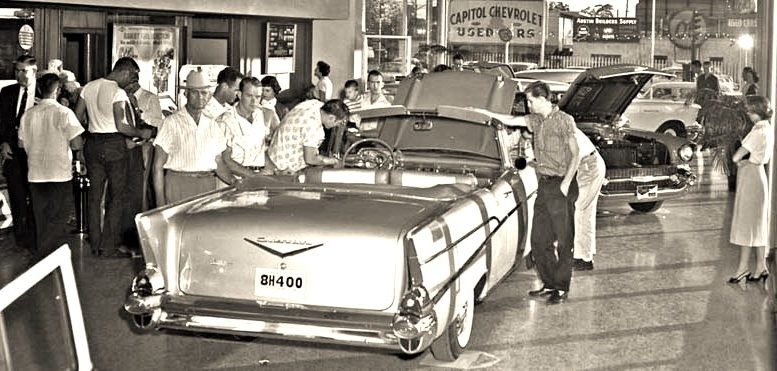
I’ve been involved in the auto industry my entire life and still attend car auctions representing several new and used car dealers. Buying a car back then was a lot different than it is today, and the marketing was so much fun with all the dealership celebrations surrounding the arrival of new model years.
John H., from Connecticut
A: John, thanks for your letter and for bringing back memories of car shopping with our fathers.
Today, many buyers begin their search online, compare prices from home and often know exactly what vehicle they want before they ever step inside a dealership, if they do at all. Nowadays, many cars are sold without the buyer ever stepping foot inside a dealership showroom. I look at both new and used vehicles online all the time, and purchasing a car has become much easier without ever leaving home. A family member bought a used 2017 Volkswagen Passat online, and the entire process went smoothly.
Years ago, that would have been impossible. Today, it’s commonplace.
Let’s board the Collector Car Corner nostalgia train and revisit the excitement of new-car introductions. All aboard!
Back in the late 1950s and early 1960s, the arrival of a new model year was a major event. Manufacturers built anticipation for weeks before the cars arrived. Television commercials and newspaper advertisements teased upcoming models, often revealing only a small portion of the vehicle. Chevrolet, for example, offered brief glimpses of the dramatic rear styling of its 1959 models. Those fleeting images created excitement and curiosity, building anticipation right up until unveiling day.
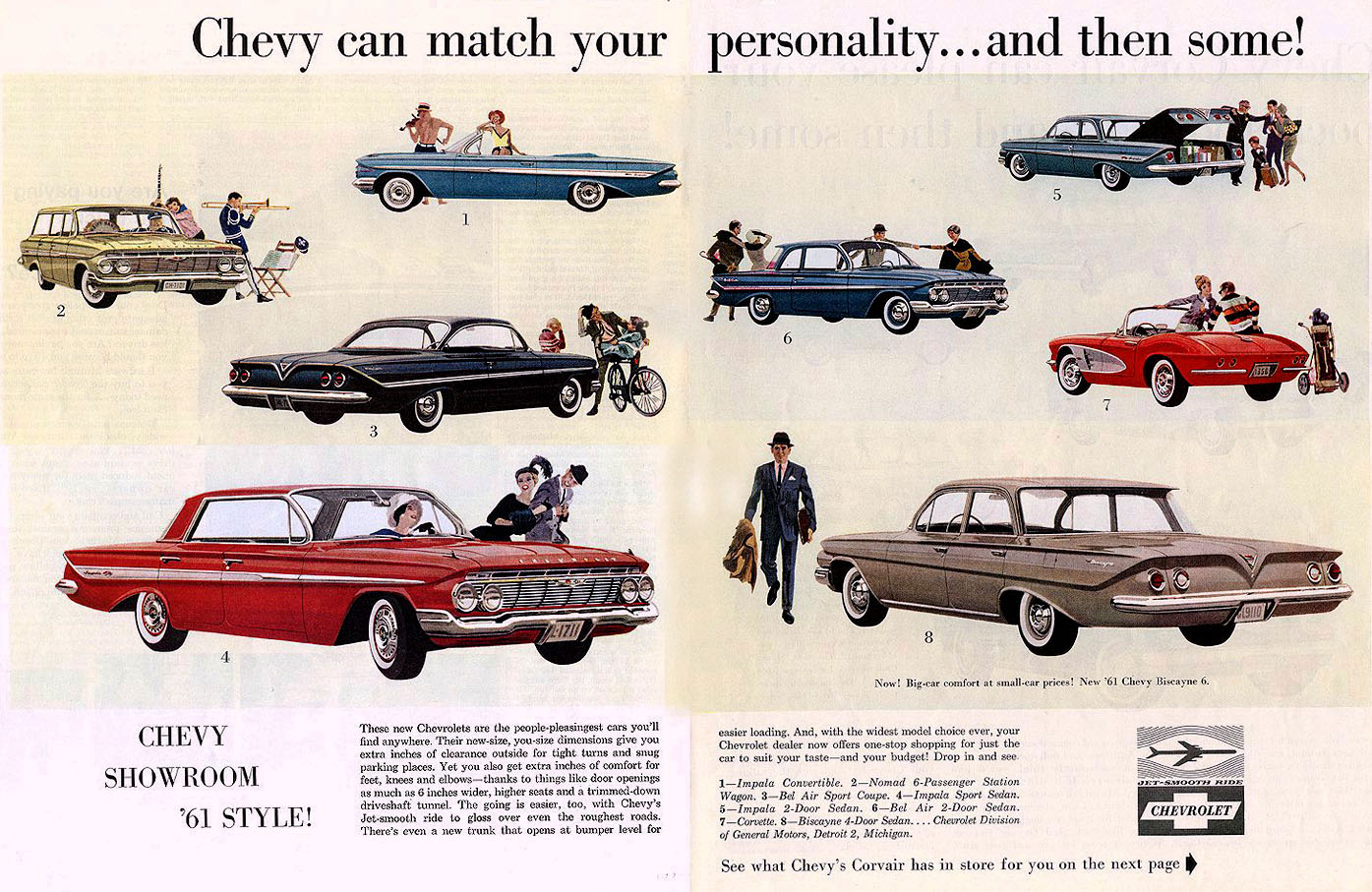
The 1961 Chevrolet lineup was a big hit with American buyers. Whether you wanted a true sports car like the Corvette, an economical Corvair or a full-size Impala, Bel Air or Biscayne, Chevrolet offered something for everyone. Performance enthusiasts could even opt for the company’s new 409-cubic-inch V8.
Photo Provided
I clearly remember seeing new cars headed to dealerships on transport trucks, many completely covered by tarps so curious motorists couldn’t get an early look. When introduction day finally arrived, dealerships turned the occasion into a true celebration.
Customers received invitations to special preview events. Showrooms were decorated, brochures were stacked high, and refreshments were plentiful. Some dealers whitewashed their windows so people outside couldn’t look in. From coffee and doughnuts in the morning to hot dogs and soft drinks later in the day, dealers wanted entire families to come see the new models. Some larger dealerships even used giant searchlights and sky-tracker spotlights that crisscrossed the night sky. For an 11-year-old boy, it was incredibly exciting. I’m sure you remember it well, too, John.
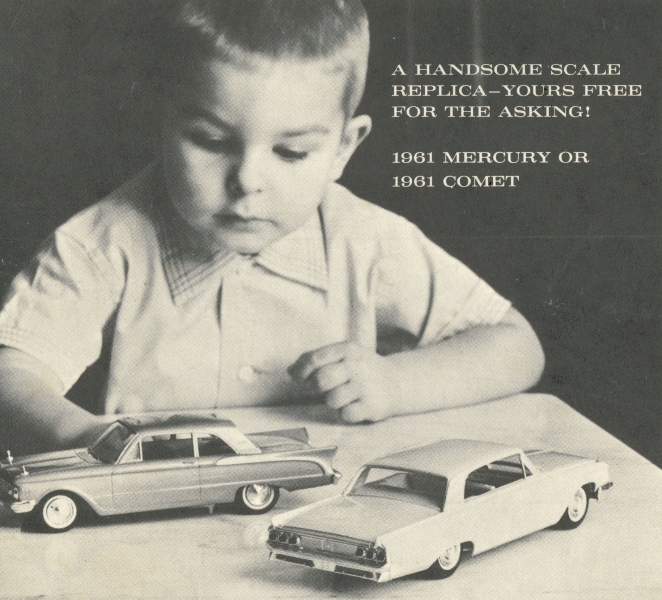
During the early 1960s, automakers and dealerships used Jo-Han-produced 1/24-scale “promo cars” to attract customers and their families to the showroom. Here, Mercury promotes its new 1961 Comet with an offer for a free dealer giveaway model.
Photo Provided
Many dealerships also gave away promotional model cars. Produced by companies like Jo-Han, these highly detailed replicas became prized possessions for young enthusiasts. Some dealerships offered them to current customers, while others simply encouraged youngsters to ask a salesperson for one. I still have several of those dealer promo models in my collection today.
Your letter reminded me of one of the biggest moments of my childhood.
In late 1960, when I was 11 years old, my father decided it was finally time to buy his first brand-new automobile. His earlier vehicles included a 1948 Chevrolet Business Coupe, a 1951 Mercury four-door sedan and a 1955 Plymouth Savoy. He took me along as we visited dealerships throughout Vineland, New Jersey, comparing makes and models and collecting brochures.
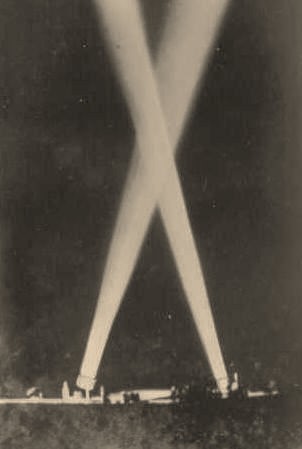
Auto dealers often rented surplus military searchlights whose powerful beams crisscrossed the night sky to attract attention during new-car introductions. Their sweeping lights could be seen for miles and became a familiar sight at dealership openings, grand openings, and special promotions throughout the 1950s and 1960s.
Photo Provided
By then, everyone knew I was completely obsessed with automobiles. My father listened to my opinions and included me in the decision-making process, something I greatly appreciated.
We spent most of our time looking at Chevrolets, Dodges and Plymouths. Interestingly, we never seriously considered a Ford. My father remained loyal primarily to Chevrolet and Dodge products throughout his life, although I do remember his used Mercury as the only Ford product he ever owned.
Eventually, the decision came down to two Chevrolets at Yank Chevrolet in Vineland. One was a black 1961 Impala four-door dealer demonstrator powered by a 283-cubic-inch V8. The other was a brand-new Seafoam Green 1961 Bel Air two-door equipped with Chevrolet’s dependable six-cylinder engine and Powerglide automatic transmission. The Impala was certainly the more luxurious car, but the Bel Air ultimately won us over.
One reason was styling. The Bel Air shared much of its appearance with the Biscayne two-door, including its distinctive roofline and rear window treatment. At the time, one of my drag racing heroes was Dave Strickler, who campaigned a 1961 Biscayne powered by Chevrolet’s new 409 engine for Ammon R. Smith Chevrolet in York, Pennsylvania. To an 11-year-old car-crazy kid, owning a family car that resembled a famous race car was a very big deal.
Although I don’t know the exact price my father paid after trading in the Plymouth, I do remember that the Bel Air was less expensive. Its list price was about $2,585 with the Powerglide, compared with roughly $2,950 for the Impala demonstrator with Powerglide. We didn’t seriously consider the Biscayne, even though it cost about $2,465 with an automatic transmission, because its interior wasn’t nearly as attractive as the Bel Air’s.
Overall, my father felt Chevrolet offered the best value. A Bel Air two-door with an automatic transmission for less than $2,700 seems almost unbelievable today, yet it was still a significant purchase when average household incomes were only a few thousand dollars a year.
So, my father drove home in a brand-new 1961 Chevrolet Bel Air, and I rode proudly in the passenger seat.
Looking back all these years later, what I remember most is not the car itself. It was the experience. The time spent visiting dealerships, studying brochures, talking with salespeople, and sharing the excitement with my father created memories that have lasted a lifetime.
Thanks again, John, for reminding me of a special era and of the fathers who made those memories possible.
Zyla is a syndicated auto columnist who welcomes reader input and questions on collector cars, auto nostalgia or motorsports at extramile_2000@yahoo.com or at 303 Roosevelt St., Sayre, PA 18840.

Be the first to comment on "Car Collector Corner: The day we brought home a new ’61 Chevy"